Lundvej 8
7400 Herning, Denmark
joachim@kastbergs.dk
+45 2980 5400
CVR: 34224161
Blog
Café Stranden – Danish Gastronomy
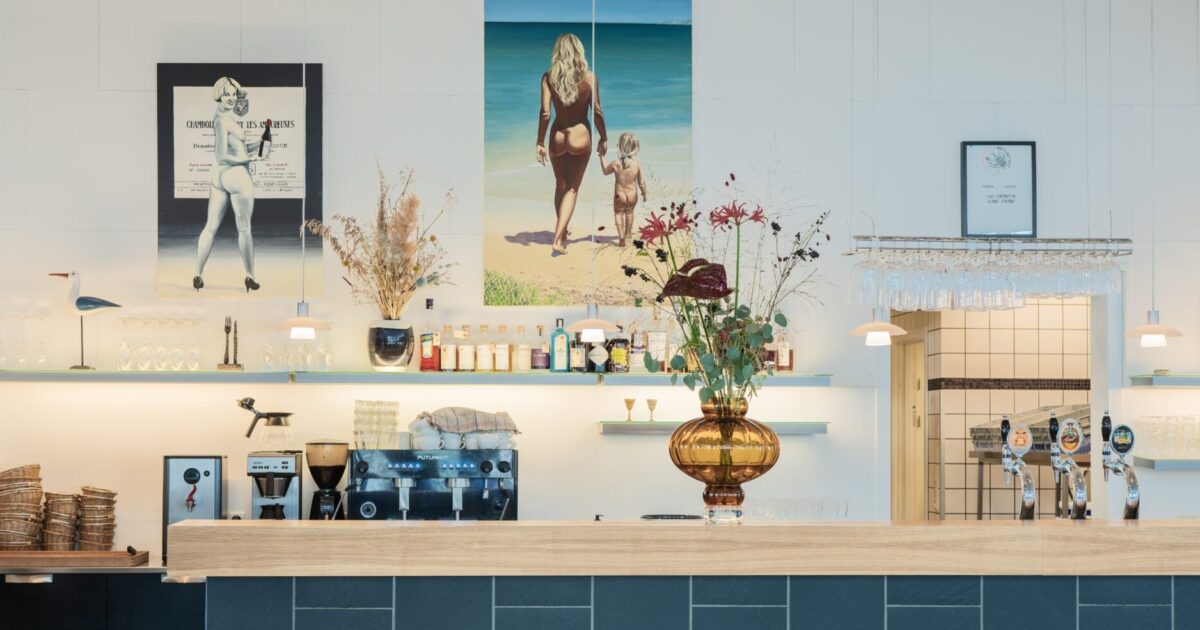
A good meal starts with good ingredients, and that is certainly not taken for granted at Café Stranden on the Danish west coast
Café Stranden, located in Henne Strand in West Jutland, sits in a prime location on the front dune row with a magnificent view of the North Sea. The café is run by Jeppe Hjulstad, who took over in 2019 when Hans Beck Thomsen retired.
Jeppe Hjulstad is a trained chef from Hjerting Badehotel and a trained waiter from Henne Kirkeby Kro. He has been part of Café Stranden since 2010—working alongside Hans Beck Thomsen for the first ten years, and since 2019 as an independent restaurateur.
The restaurant is, naturally, situated in a holiday area that attracts both tourists and regulars. Since guests arrive throughout the day, a slightly different ordering concept has been developed: guests place and pay for their orders at the bar counter, and the food is then brought to their table. Café Stranden’s kitchen is inspired by the French brasserie style—relaxed and simple, yet built on high-quality ingredients.
Uncomplicated Brasserie
Jeppe loves the simple, unpretentious, and informal—that’s reflected in Café Stranden’s interpretation of a brasserie. In this version, all elements of the restaurant come together: ambiance, service, ingredients, and, above all, well-prepared meals. Several elements are done a bit differently to support the laid-back vibe. For example, table reservations are not accepted, and guests order and pay at the bar.
Café Stranden’s dining area is dominated by its panoramic view of the ever-changing North Sea, creating a beautiful contrast to the darker furnishings. In addition to the stunning vista, the room features artwork depicting nude figures—a topic that has sparked debate and even caught the attention of American media. The team believes it adds to the relaxed atmosphere fitting for a vacation destination.
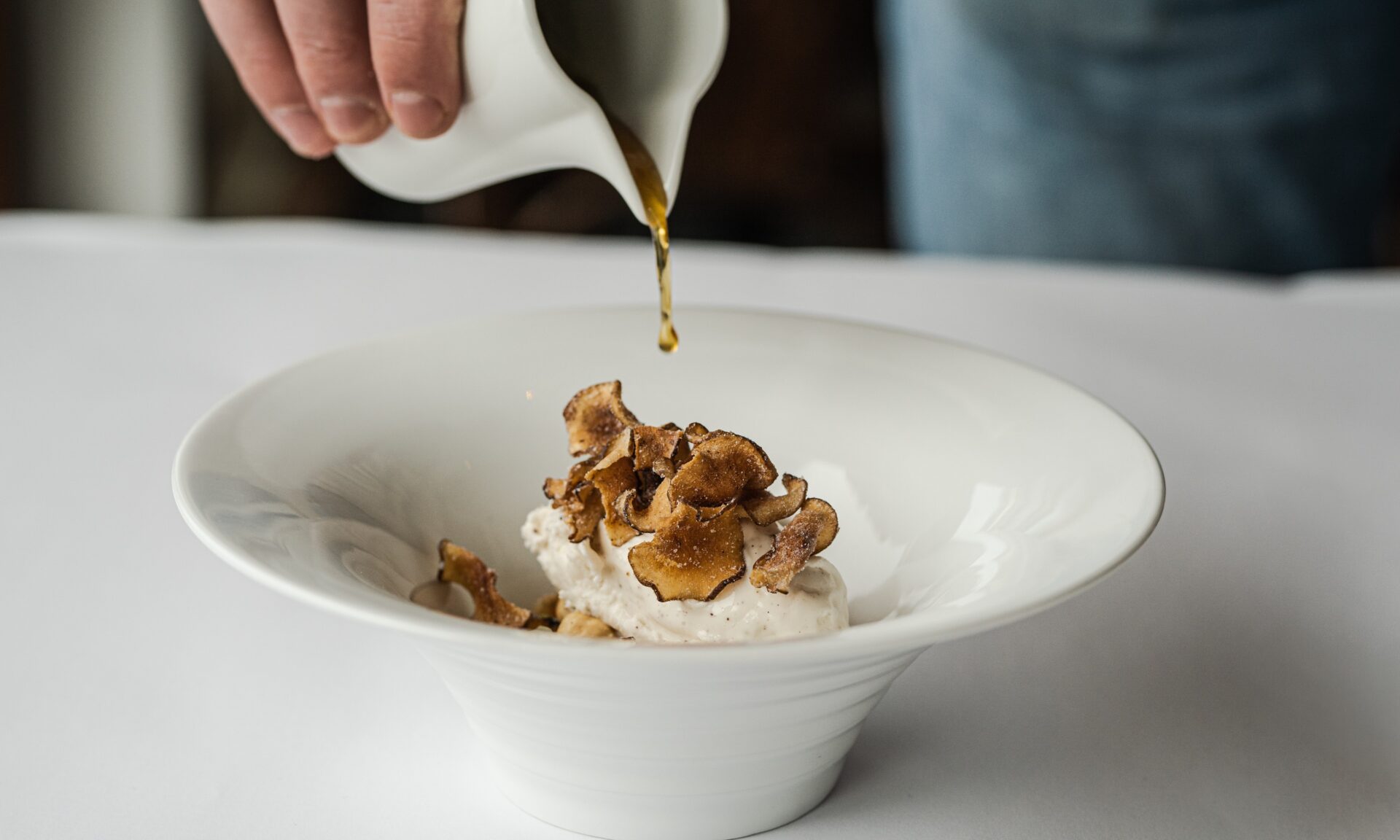
The brasserie style extends into the kitchen, where French-inspired dishes are prepared using high-quality ingredients, preferably sourced locally—from freshly caught fish from Hvide Sande, to vegetables grown in nearby villages, and not least, gourmet ice cream from Kastbergs, which is used in delicious and inspiring desserts. Typical desserts on the menu might include:
- Triple mousse with strawberry sorbet
- Jerusalem artichoke chips with browned butter and vanilla ice cream
- Poached pear with salted caramel ice cream
Café Stranden’s Collaboration with Suppliers
At Café Stranden, there are clear values regarding the ingredients used in the kitchen. They must be produced responsibly, and preferably of local origin. That’s why our partnership with Kastbergs Gourmet Ice Cream is a perfect match.
It’s unique that Kastbergs, as a producer, makes many of their products using local ingredients—such as their fantastic strawberry sorbet made from Danish strawberries from Samsø, which is also the case for their rhubarb sorbet. “This is exactly how we want our suppliers to work—with top-tier quality and a strong personal connection,” says Jeppe Hjulstad, adding, “we can’t imagine working with anyone else.”
In addition to our shared values around ingredients, handling, and sustainability, both parties benefit from an open and constructive dialogue. This becomes evident when Kastbergs experiments with new recipes—Jeppe is always happy to offer his input, just as Kastbergs can create special productions for Café Stranden. Most recently, Kastbergs made a vanilla yogurt specifically for Café Stranden, which was used in a dessert during the fall of 2022.
Staffing Challenges
Like many other restaurants, one of the biggest challenges is finding qualified staff—especially chefs and waiters. This issue is only magnified when operating in a holiday town in West Jutland like Henne Strand. That’s why Café Stranden has several tools in its toolbox to ensure proper staffing for restaurant operations.
First and foremost, they prioritize creating a good work environment where everyone is respected, and community is a central value. Most of the approximately 40 employees are part-time locals who return year after year. Several are students in Aarhus who choose to work during the summer to enjoy the atmosphere and camaraderie.
Additionally, the menu is managed dynamically—not only to offer seasonal variety but also to match the number of chefs available at any given time.
The Chalkboard – A Tool to Reduce Food Waste
It is well known that chefs often change jobs in search of inspiration and professional growth. Jeppe Hjulstad is grateful to have worked with skilled professionals who generously shared their approach to ingredients, cooking, and many other essential skills that every restaurateur should master.
One important trait is reducing food waste—not just because it’s good business, but out of respect for the ingredients and a refusal to discard quality produce. For this purpose, Café Stranden has a chalkboard hanging high and centrally on the wall. On this board, the day’s specials are written—often several of them. These dishes are largely composed of leftover ingredients from the previous days, which are used to minimize food waste as much as possible. Jeppe has learned from his mentors to respect ingredients—and that “money lies in the corners.”
Many of Café Stranden’s guests are well aware of the chalkboard and often order from it to get something out of the ordinary. The chef creates something delicious, the kitchen uses its leftovers, and the guests are happy.
With food waste in mind, Kastbergs thanks Café Stranden for sharing their story with us.