Lundvej 8
7400 Herning, Denmark
joachim@kastbergs.dk
+45 2980 5400
CVR: 34224161
Blog
Popular Italian Desserts with Ice Cream
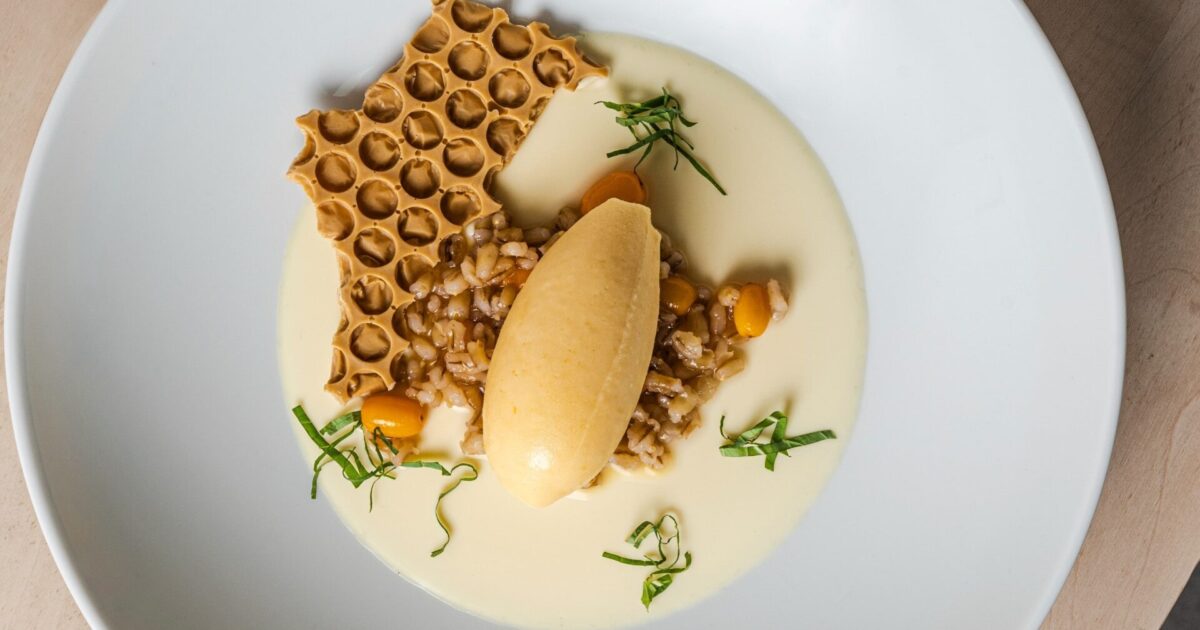
In this post, you'll discover the fascinating history of 11 Italian desserts, learning about their origins and why they are so beloved both in Italy and around the world.
Introduction to Italian Gastronomy
Italy is famous for its delicious food and fine wines, but it is also home to some of the world’s most iconic Italian desserts. These desserts have won hearts worldwide with their unique flavors, history, and ingredients. Italian cuisine focuses on simplicity and taste. There is a dish for every occasion and every mood, and the same applies to desserts. From the famous Tiramisu to lesser-known but equally wonderful creations, Italian desserts are a source of inspiration for chefs everywhere. Their history dates back to Ancient Rome, where rich ingredients and sweet treats were reserved for the wealthy. Over time, these desserts became a part of Italian culture and are now enjoyed by all.
In this post, we’ll explore the history behind 11 Italian desserts that have captured the hearts and appetites of many. So sit back, relax, and let Kastbergs’ curiosity for desserts guide you through the Italian dessert kitchen.
The History Behind Italian Desserts
Tradition and Culture
Italian desserts have deep roots in the country’s culture and traditions. Many of the recipes we know today have been passed down through generations. For instance, Tiramisu is relatively young, originating from the Veneto region in the 1960s, but it quickly gained worldwide popularity.
Regional Variations
Italy is divided into regions, each with its unique dessert traditions. From Sicily’s Cannoli to Tuscany’s Panforte, there’s a rich variety that reflects the country’s diversity. This regional difference allows chefs to explore a wide range of flavors and techniques.
Modern Influence
While tradition plays a significant role, modern influences have also shaped Italian desserts. The innovative use of ingredients and techniques has brought new twists to classic recipes, keeping them fresh and relevant in today’s culinary world.
Why Do We Love Italian Desserts?
First and foremost, the ingredients used in Italian desserts are generally of the highest quality. From the sweet, juicy tomatoes in savory dishes to the fresh berries used in desserts, Italian chefs only use the best ingredients.
Many Italian desserts are also known for their simplicity, yet complex flavors. A great example is Tiramisu, which consists of just a few ingredients but tastes extraordinary.
Another reason for the popularity of Italian desserts is their deliciousness. Italians are known for maintaining a perfect balance between sweet and sour in their desserts. Take, for example, the popular Italian dessert Panna Cotta, which is made of cream, sugar, and vanilla. It’s the soft and silky texture of Panna Cotta, paired with a tangy raspberry sauce, that makes it so exciting.
Just like their food, Italian culture is characterized by sharing and togetherness, and this is reflected in their desserts. Italians enjoy their desserts around the table with family and friends. Desserts like Cannoli, filled with ricotta, chocolate, and lemon, or Zeppole, small balls of fried dough served with a soft cream, are perfect for sharing and enjoying in good company.
Italian desserts are also known for their versatility. They come in various sizes and forms, from classic Gelato in a cone to the sweet, sticky Sfogliatelles from Naples. Italian desserts are available worldwide and can be enjoyed as a quick snack or a delicious dessert after dinner.
Finally, another factor contributing to the popularity of Italian desserts is their history. Most Italian desserts have historical significance or fascinating backstories and are part of Italy’s rich culture and history. One of the most famous Italian desserts, Zuccotto, was created in Florence in the 16th century as a tribute to the famous dome in the city. You can read more about the history behind many of these desserts in the next section.
Famous and Classic Italian Desserts
Panna Cotta
The story of Panna Cotta starts in Piemonte, a region in Italy. It is said to have originated from another dessert called “Latte Cotta,” which is made by boiling milk. In the mid-19th century, when gelatin became a common kitchen product, some chefs began replacing milk with cream to achieve a richer and more stable consistency. However, it took time for Panna Cotta to gain popularity in Italian dessert cuisine. It became a culinary legend in Italy in the 1960s, thanks to the famous chef Franca Fissolo.
Franca Fissolo was a pioneer in Italian cuisine and one of the founders of the Slow Food movement. She chose Panna Cotta as one of her signature dishes and gradually began serving it in her restaurant. Fissolo’s Panna Cotta became renowned, and today, her restaurant is considered the “temple” for Panna Cotta.
Tiramisu
Tiramisu, which means “pick me up” or “give me a hug,” originates from the Veneto region in northeastern Italy. While the exact time and reason for the creation of this dessert are unclear, there are several theories about its origin. Some believe that an early version of Tiramisu was served in the Lombardy region in the 17th century as a kind of “pick-me-up” for soldiers at war. Others claim that Tiramisu was invented in Venice in the 18th century as a dessert for the aristocracy.
The most common theory about Tiramisu’s origin suggests that this dessert was invented in the 1960s in Treviso, a small town in the Veneto region, by the pastry shop Le Beccherie. The legend says that the owner of Le Beccherie, Ada Campeol, invented this dessert for her restaurant using existing ingredients – savoiardi cookies, strongly brewed espresso, a mix of egg yolks, sugar, and mascarpone cheese. She mixed these ingredients together and created a dessert so delicious that it became an immediate success.
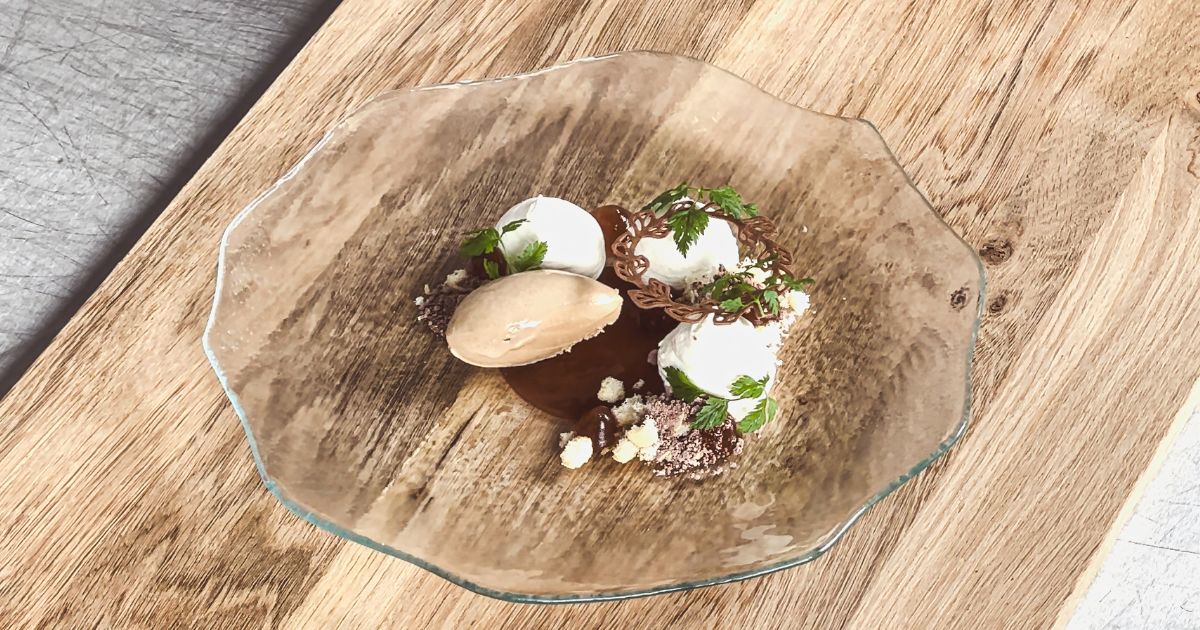
In our version of Tiramisu, we have tried to make a modern interpretation, where each component of the dessert is broken down into individual elements, and the coffee flavor comes from a slightly different source than the original.
Cannoli
Cannoli’s origins trace back to the 9th century in Arabia, where a dessert called “Qanawat” was made. This dessert was known as a sweet, crispy shell filled with a soft cheese mixture and dried fruits. When the Arabs ruled Sicily, their culinary traditions influenced Sicilian cuisine. Cannoli is believed to have been inspired by the Arabic dessert Qanawat, as they share similar ingredients such as the shell and cheese filling.
During the Middle Ages, Cannoli became a popular dessert in Sicily, Italy. These delightful tubes were originally made to celebrate Carnevale, a festival marking the last day of Lent. Cannoli were filled with a mixture of sweet ingredients typical for the poorer classes, especially nuts and goat cheese. However, around the 1800s, Cannoli became a delicacy, with the filling often made from sweet ricotta, whipped cream, or chocolate.
Affogato
The story of the Affogato dessert dates back to 16th-century Italy when coffee was first introduced. It wasn’t until the 20th century that coffee became widely available to everyone and became an important part of Italian culture. The original Affogato was served as a simple cup of hot espresso with a scoop of ice cream, but it later evolved into the dessert drink we know today. It is a very popular dessert in Italy and is typically served after a meal or as a special treat on warm summer days.
However, the history of Affogato is not limited to Italy. It has become a popular dessert drink in many countries around the world. Additionally, there are now many different variations of Affogato. For example, you can use different types of ice cream or add alcohol to give it a more adult flavor. Another variation is to use a different coffee brewing method to give the drink a unique taste.
Limoncello Gelato
Limoncello is an Italian liqueur that originates from the Amalfi Coast in the Campania region. The liqueur is made from lemon peel, sugar, water, and alcohol. Limoncello’s sweet and tangy flavor is popular both in and outside Italy. Limoncello gelato is made from limoncello liqueur and combines two of Italy’s most famous and beloved products: lemons and gelato. To make a good limoncello gelato, it’s important to use fresh, juicy lemons – preferably from the Amalfi Coast – and a high-quality limoncello liqueur.
The first time limoncello liqueur was widely used in gelato was in the 1950s. At that time, it was a new and exciting product that quickly gained popularity. There was something special about the tangy taste and smooth consistency of gelato that perfectly complemented the sweetness and flavor of limoncello. Limoncello gelato quickly became a favorite among both Italians and tourists.
Crostata
Crostata is an Italian dessert made with a crust of shortcrust pastry or pasta frolla, filled with fruit compote or Nutella. This is a classic dessert from Italian cuisine and exists in variations all over the country. The history of Crostata begins in the 15th century in the Lombardy region of Italy. The area was known for its fruit production, and local chefs began experimenting with different ways to use the fruits. This sweet tart quickly became a favorite in Italy because it is easy to make and can be filled with various fruits.
Crostata was originally a dessert reserved for wealthy Italian families, as the ingredients were expensive and hard to obtain for ordinary people. However, during the 18th century, ingredients became more accessible, and Crostata spread throughout Italy and became a beloved dessert across the country. Crostata has also become quite popular in modern cuisine. Some chefs have experimented with making “savory” versions, using fillings like watercress, zucchini, or various cheeses, turning it into a delicious appetizer or light lunch dish.
Torta Caprese
Let’s take a trip back to the 1920s on Capri in Italy. There was a hotel called “Capri Palace,” and in the kitchen worked a young apprentice named Carmine Di Fiore. One day, he was tasked with baking an almond cake for some important guests at the hotel but forgot to add flour to the batter. When the cake still tasted fantastic, it became a recipe and was served at the hotel as “Torta Caprese” or Capri cake.
Today, Torta Caprese is a part of Italian cuisine and comes in various versions. There are still many different interpretations of the cake, but the ingredients are always the same: almonds, butter, chocolate, sugar, and eggs. The cake is known for its soft center and crispy exterior and is often served with shaved chocolate, whipped cream, or ice cream.
Italian Meringue
In Italian cuisine, meringue has been used to create a variety of sweet and savory dishes for centuries. However, the history of meringue goes even further back, all the way to ancient Rome, where they made a sweet delicacy called ‘dulcia domestica.’ This treat was made with honey and egg whites and was very popular among the Romans. It wasn’t until the 16th century that sugar replaced honey in Italy to make meringue.
Today, there are two main types of meringue: Swiss and Italian meringue. Swiss meringue is made by whisking egg whites and sugar together in a bowl placed over a pot of warm water. Italian meringue, on the other hand, is made by whisking hot sugar syrup into beaten egg whites. This technique makes the meringue extra fluffy and creamy. Both types are common in today’s kitchens and are used in a variety of desserts, such as Pavlova, Macarons, and Mazarins.
Zabaglione
The first recorded recipe for the dessert Zabaglione dates back to the 16th century in Lombardy, Italy. At that time, the dessert was known as Sambayon and was primarily used for ceremonial occasions, such as weddings. It was mainly the nobility who enjoyed this dessert, as it was a rather costly delicacy to obtain. Zabaglione has been a treat in Italy ever since.
Today, Zabaglione is widely enjoyed in Italy and is considered a classic. While Marsala wine is the most traditional flavor variation of the dessert, other wines can also be used. Some restaurants in Italy even add chocolate, coffee, or fruit to create the desired flavor. But fundamentally, Marsala wine plays an important role in Zabaglione, giving the dessert its characteristic nutty taste.
The recipe for Zabaglione is simple – it consists of three ingredients: egg yolks, sugar, and Marsala wine. The eggs are whisked until fluffy, sugar is added, and the mixture is placed in a warm bowl over a double boiler. The mixture is then whisked until light and airy. It’s important to ensure that the bowl doesn’t come into contact with the boiling water, as this can cause the dessert to curdle.
Semifreddo
The first Semifreddo was created by Gastone Lenòtre in 1968, and it quickly became a massive success. Both in Italy and around the world, Semifreddo became a popular dessert. Semifreddo dates back to the Middle Ages when it was a technique used to keep food fresh – especially in the summer months, when it was difficult to store food. Semifreddo was thus a way to preserve dessert without worrying about its rapid deterioration in heat.
Semifreddo is made by combining egg yolks, sugar, and whipped cream, which are then flavored with various ingredients – such as cocoa, fruit, or nuts. This mixture is stirred together and frozen for about four hours until it is half-frozen. It is then ready to serve and can be decorated with fresh fruit, chocolate, or nuts.
Torta del Nonna
Torta del Nonna is a delicious, classic Italian dessert that originates from the Tuscany region in central Italy. There are many variations of Torta del Nonna, but the basic recipe consists of a “pasta frolla” base, a sweet tart crust, filled with a soft custard cream and egg yolk. The tart is then sprinkled with powdered sugar and topped with pine nuts.
Historically, Torta del Nonna is a relatively new dessert, and its origins can be traced back to the Tuscany region in Italy in the early 20th century. The name “Nonna” or “grandmother” often refers to a beloved “nonna” in childhood who made this delicious tart for generations. It is believed that the recipe for Torta del Nonna was invented by a local pastry shop in Lucca in Tuscany in the early 20th century.
Now we’ve looked at 11 of the most famous Italian desserts and their fascinating stories. These desserts will take you on a culinary journey to Italy, no matter where you are in the world. They are simple yet delicious and will give you a taste of Italy’s rich culture and traditions, focusing on flavor, simplicity, and quality local ingredients.
You can also discover more delicious ice cream desserts here.
Bon Appetit!