Lundvej 8
7400 Herning, Denmark
joachim@kastbergs.dk
+45 2980 5400
CVR: 34224161
Blog
The Sea Buckthorn Bush
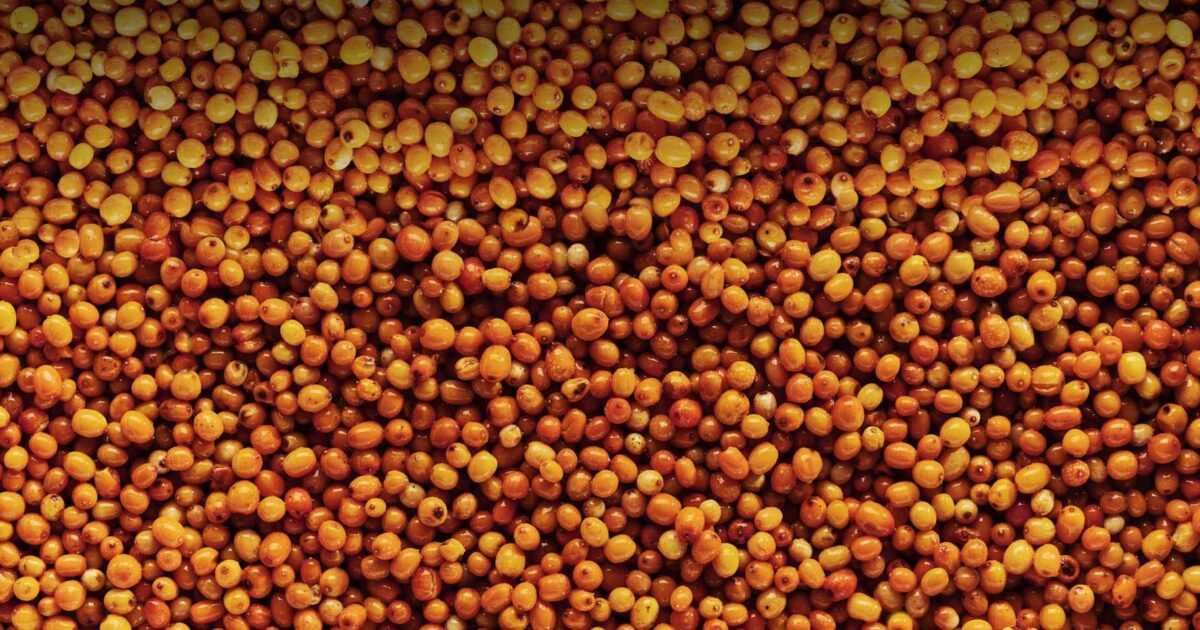
The sea buckthorn bush is a clear favorite among chefs, partly because its berries bring acidity and fresh flavor, offering a perfect counterbalance to sweet desserts. Read more here about how we make our sea buckthorn sorbet, how we process the berries, and more
The Sea Buckthorn Bush and Its Berries
Sea buckthorn is a wild-growing fruit bush with a few different varieties. At Kastbergs, we naturally use the type that grows in northern countries. The berries are yellow to orange stone fruits, roughly the size of redcurrants or blackcurrants. They are also packed with vitamins and antioxidants.
Typically used in autumn and winter desserts, the berries ripen late in the year—between August and October. For most of the year, the berries are practically inedible—not because they are unsafe, but because they are too sour to enjoy. Ideally, the berries should experience the first frost before being consumed. The frost helps mellow the extreme tartness.
An alternative to waiting for the first frost is to cut off the small berry-laden branches and freeze them yourself. The freezing process not only tones down the intense sourness, but also makes the berries easier to harvest—they can now be shaken off gently and don’t become mushy during picking.
Sea buckthorn is a popular ingredient among chefs experimenting with modern Nordic cuisine, offering a very tart and refreshing flavor that pairs beautifully with sweet dishes.
Growth and Conditions
The sea buckthorn bush we know in the Nordic region typically grows along coastlines and prefers sun-exposed areas. It’s a very hardy plant, capable of growing in most types of soil—but thrives best in soil with a high lime content. It can withstand strong winds, salt spray, and the often harsh coastal weather. These tough conditions are part of what gives the berries their intense, acidic taste.
Production Process: From Sea Buckthorn Bush to Sea Buckthorn Sorbet
How does the quirky and tangy sea buckthorn transform into sorbet? Let us tell you.
The first step after the berries have been harvested from the sea buckthorn bush and received frozen, is to add sugar and blend them. The blended berries are then passed through a sorting machine to remove any seeds from the sea buckthorn sorbet. What remains is a pure, intensely tart sea buckthorn juice, which forms the base flavor of our sorbet.
This juice is then transferred to our mixing tanks, where it is combined with water and dry ingredients, such as various sugars, to achieve the perfect taste and texture in the finished sorbet. We always aim to use the freshest possible ingredients, so the berries are turned into sorbet as quickly as possible—always within 24 hours of being blended, sorted, and juiced. This ensures the juice retains its freshness and sharp acidity, as it can lose some of its edge if left to sit too long. With this careful handling, you and your customers get the best and freshest flavor.
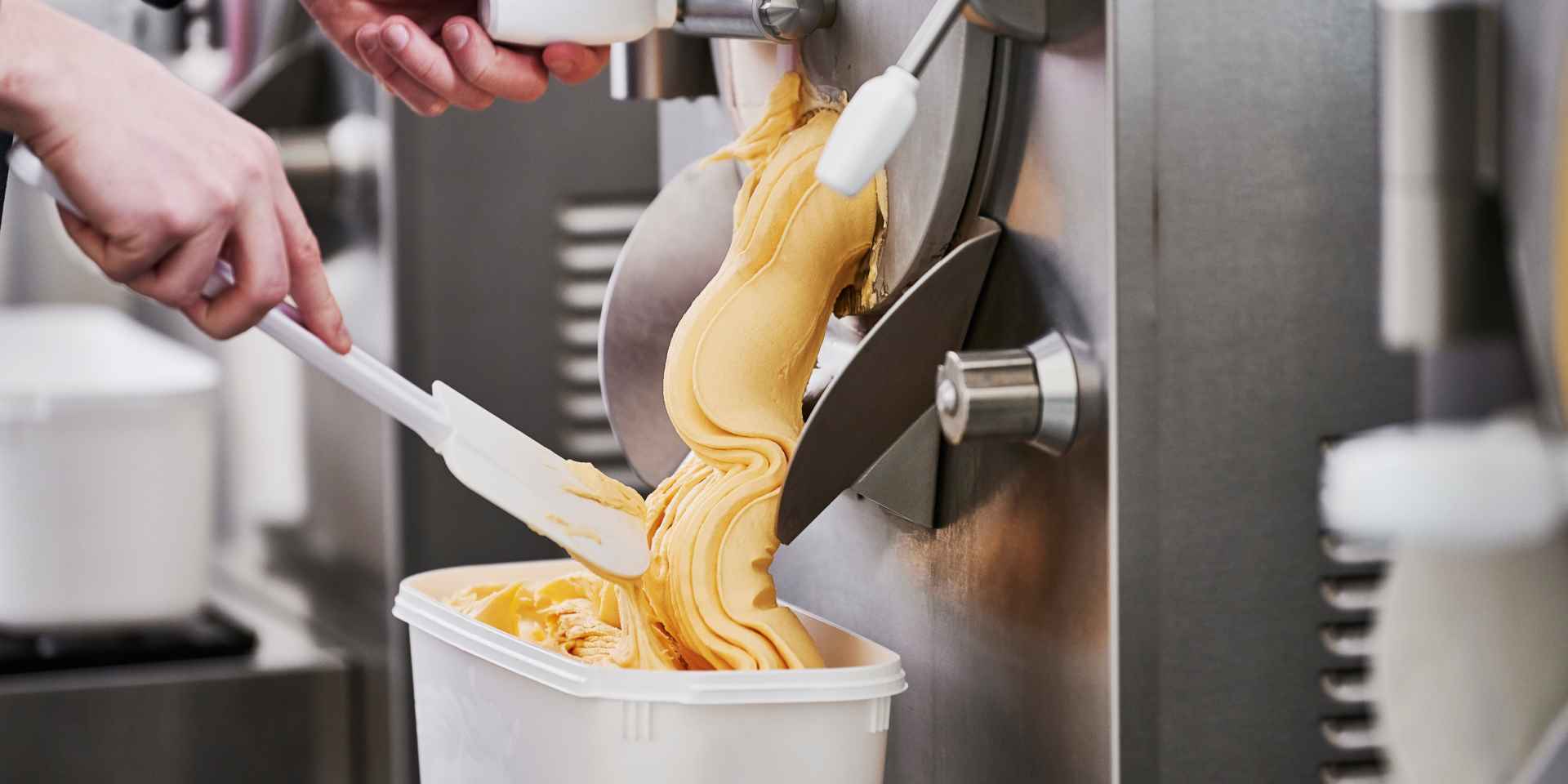
Finally, the finished mixture is poured into our ice cream machines. Inside, the sea buckthorn mixture hits a drum cooled to -35°C. As it slowly freezes onto the icy drum, a rotating scraper with blades removes the frozen sorbet and kneads it into a smooth, creamy texture. Once the sorbet reaches -8°C, it is dispensed from the machine and immediately transferred to a blast freezer. This freezer blows air at -35°C, ensuring the sorbet freezes as fast as possible, which prevents the formation of ice crystals.
Sea buckthorn sorbet is perfect for ice cream parlors and cones on warm summer days, but it is typically used by chefs during autumn and winter, as that’s when the berries ripen and are harvested. It’s ideal as a tart counterpoint in refined desserts. Kastbergs sorbets are made only with fruit, water, and sugars, making them suitable for vegetarians and vegans alike.
And that’s a quick look into how we make our sea buckthorn sorbet – from wild coastal bush to finished, flavorful dessert.