Lundvej 8
7400 Herning, Denmark
joachim@kastbergs.dk
+45 2980 5400
CVR: 34224161
Blog
White Chocolate in Desserts
In this post, you’ll learn more about white chocolate and how to use it in desserts
What is White Chocolate?
Chocolate – the universal indulgence that comes in many forms and flavors. While dark and milk chocolates often steal the spotlight, white chocolate occupies a special place among connoisseurs. But what is the story behind it, and why is it a favorite ingredient for chefs in the dessert kitchen?
White chocolate stands out from its darker relatives by being free from cocoa mass, which otherwise gives chocolate its characteristic brown color and deep, bitter flavor. Instead, white chocolate primarily consists of cocoa butter, sugar, and dairy products, resulting in a rich, creamy, and sweet profile. This blend creates a silky texture that melts on the tongue and offers a more subtle yet intense taste experience.
The History of White Chocolate
White chocolate was first introduced in the 1930s when Nestlé developed it in Switzerland. It was an attempt to utilize surplus cocoa butter while simultaneously offering an alternative to traditional chocolate during a time of cocoa shortages. The result was a new type of chocolate that quickly found its way into the hearts of sweet treat enthusiasts worldwide.
Why White Chocolate is Great in Desserts
White chocolate is especially popular among chefs and pastry chefs for several reasons. First, its natural sweetness and creamy texture can add a luxurious depth to desserts without overpowering other ingredients. It serves as an excellent canvas for combining with fruits, nuts, and even some spices.
Secondly, white chocolate is versatile and can easily be melted, tempered, and molded. This makes it an excellent ingredient in everything from ganache and glazes to mousses and chocolate pieces. Its ability to be colored and flavored also makes it an ideal choice for chefs who want to experiment with presentation and innovation.
Why White Chocolate is Excellent in Desserts:
- Balance of Sweetness:
While white chocolate is sweet, it has a subtle flavor that doesn’t overwhelm. It can help balance the flavor in a dessert that has elements of tartness or bitterness, such as fruit-based dishes or desserts with dark chocolate. - Textural Diversity:
Its creamy consistency gives a luxurious mouthfeel, which can turn a simple dessert into something truly special. White chocolate cream can be used as a delightful filling in layer cakes, macarons, and chocolate truffles. - Rich Combinations:
The combination of white chocolate with other flavors opens up a world of possibilities. It pairs well with nearly anything – from classic vanilla and berries to more exotic flavor combinations like lavender or Earl Grey tea.
- Aesthetic Appeal:
White chocolate visually adds contrast to the darker colors in the world of desserts and can decorate any cake or dessert arrangement.
Different Uses of White Chocolate in Desserts
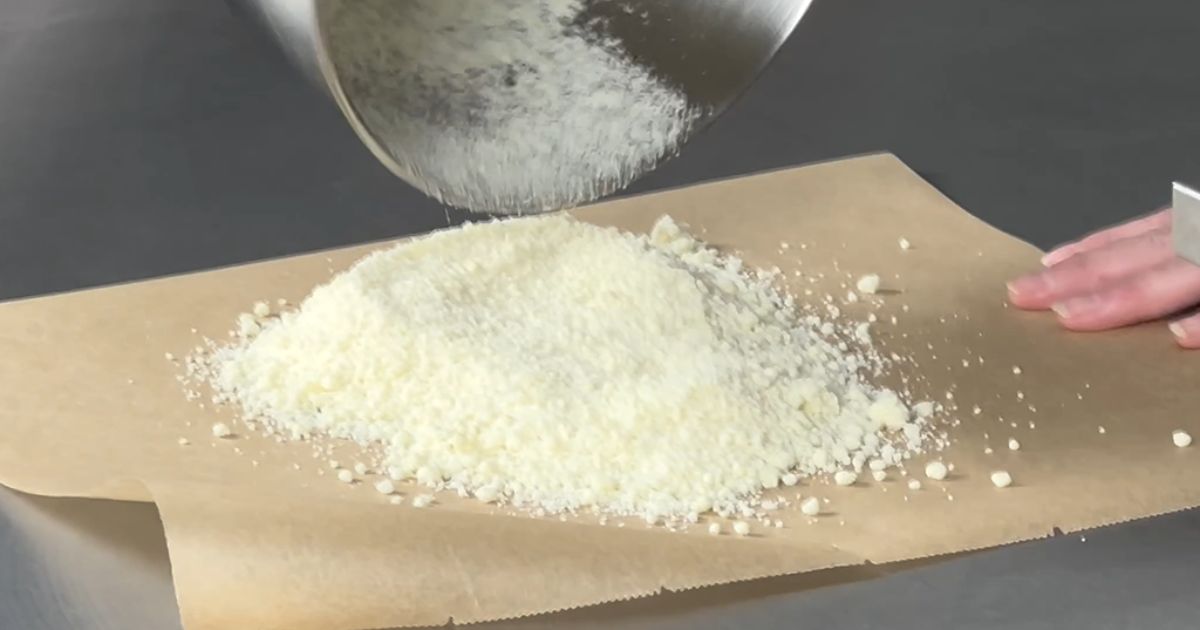
Crystallized White Chocolate
White chocolate can be used in a variety of ways and comes in different forms, just like regular dark chocolate. For example:
White Chocolate Cream
A delicious creamy variant that can be used, among other things, to provide a soft and creamy texture in your desserts. This makes sense if you want to introduce a contrasting and airy texture to desserts that may already have crunchy or heavy elements.
Crystallized White Chocolate
In many desserts, a crunchy element is a must, as different contrasts in desserts help make the flavor experience more complex and exciting. It could be flavor contrasts, but definitely texture differences as well. Specifically, when it comes to texture, crystallized white chocolate is an excellent choice.
A tip for using crystallized white chocolate (or other types of crunchy elements) is to place them beneath your ice cream ball or quenelle rather than directly on the plate. This helps delay the melting of the ice cream, and the dessert stays visually appealing for a longer period.
White Chocolate Mousse
The sweet, airy mousse is another great choice if you want to vary your use of white chocolate, and it’s an excellent option for creating a beautiful and light dessert. White chocolate is, of course, just one of many variations of the very popular mousse, which is widely known.
6 Desserts with Different Types of White Chocolate
You shouldn’t miss some inspiration for your next white chocolate dessert from the archive of our dessert universe. We’ve gathered a handful of desserts for your inspiration, featuring white chocolate cream, crystallized chocolate, and white chocolate mousse.
Fresh Pear Dessert with Vanilla Ice Cream
This fresh pear dessert with vanilla ice cream is intended to show how you can use the same ingredient in a dessert in different ways, contributing in various forms. It consists of poached pear balls and fresh pear slices. It also features a white chocolate cream that adds sweetness and a creamy texture to contrast with the other elements of the dessert.
Yuzu Dessert
This yuzu dessert has a base of delicious yuzu mousse, surrounded by kaffir lime oil for decoration and a bit of acidity. It’s served with a quenelle of delightful apple sorbet, sitting on top of lovely crystallized white chocolate. The crystallized chocolate here adds sweetness to a slightly tart dessert while also contributing a textural contrast.
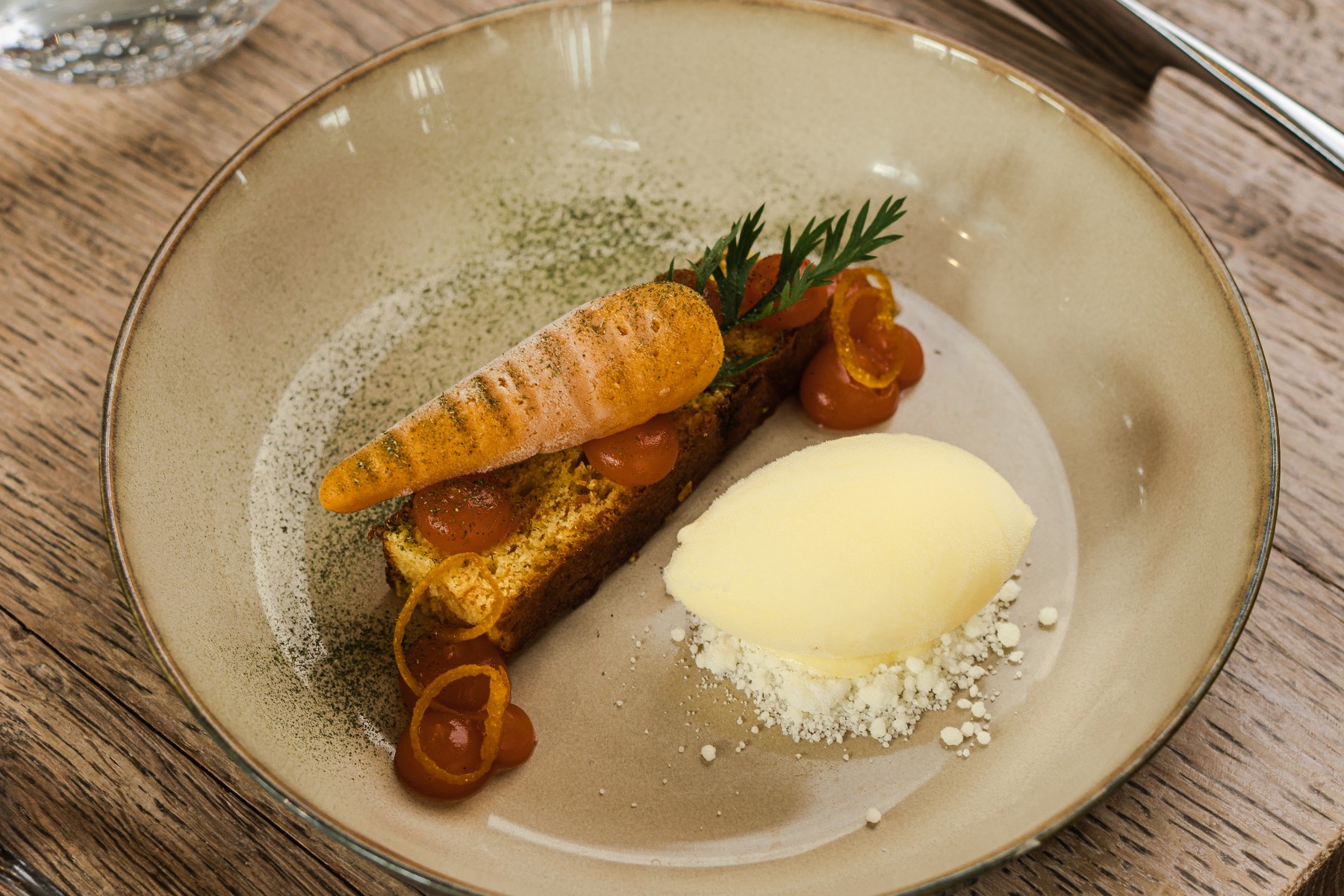
Carrot Cake
The idea behind the carrot cake with orange sorbet is to combine an ingredient that is naturally sweet (the carrot) with something naturally tangy (the orange). This dessert includes several elements of carrot, with the orange sorbet sitting on a layer of crystallized white chocolate. The crystallized chocolate here serves multiple purposes: it adds sweetness, provides a contrasting texture, and gives the sorbet a base to sit on, preventing it from melting into the plate.
Festive Dessert with Passionfruit Mousse Balloons
This dessert includes passionfruit mousse balloons and raspberry sorbet, which rest on a base of crystallized white chocolate, serving the same purpose as in the previous dessert.
Summer Dessert with Rhubarb Sorbet
In this summer dessert, we use several elements of rhubarb, including our own rhubarb sorbet. The white chocolate element here is a white chocolate mousse that contributes to a light and airy summer dessert, while also providing sweetness to counterbalance the slightly tart rhubarb.
Mazarin Dessert with White Chocolate Cream and Gooseberry Sorbet
This is a balanced dessert, balancing sweetness and tartness, as well as textures and aromas. For example, the gooseberry sorbet and white chocolate cream complement each other, while elderflower jelly provides a lovely aroma.
White chocolate is a versatile ingredient that can enhance any dessert menu. From its origins to its soft spot in the heart of the dessert industry, white chocolate has managed to impress and inspire chefs.
So, the next time you’re in the kitchen experimenting with flavors and textures, remember the elegant contribution that white chocolate can offer to your dessert. Let your creative side run free and use white chocolate in its many forms to create sweet desserts that will impress even the most discerning dessert aficionados.