
10 Austrian desserts that define Vienna's café culture
Austria is one of those places in Europe where dessert is never just an afterthought. In Vienna's old coffee houses, the cake is part of the ritual itself — you don't just order a cup of coffee, you order a story that often goes back several hundred years. From the classic Sachertorte to the steamed Germknödel, every Austrian dessert has its own origin story, often involving emperors, pastry chefs and a touch of myth. We have gathered ten of the most distinctive dishes from the Austrian dessert tradition. Some are cakes, others are everyday dishes, but all of them say something about why Viennese café culture still draws visitors to the historic coffee houses.
Classic Sunday and everyday dishes
Not all Austrian desserts are cakes for the coffee table. Many of them are everyday dishes, Sunday classics or food for after a day in the mountains — and the techniques behind them are often older than the cakes themselves.
The recipe for Wiener Apfelstrudel
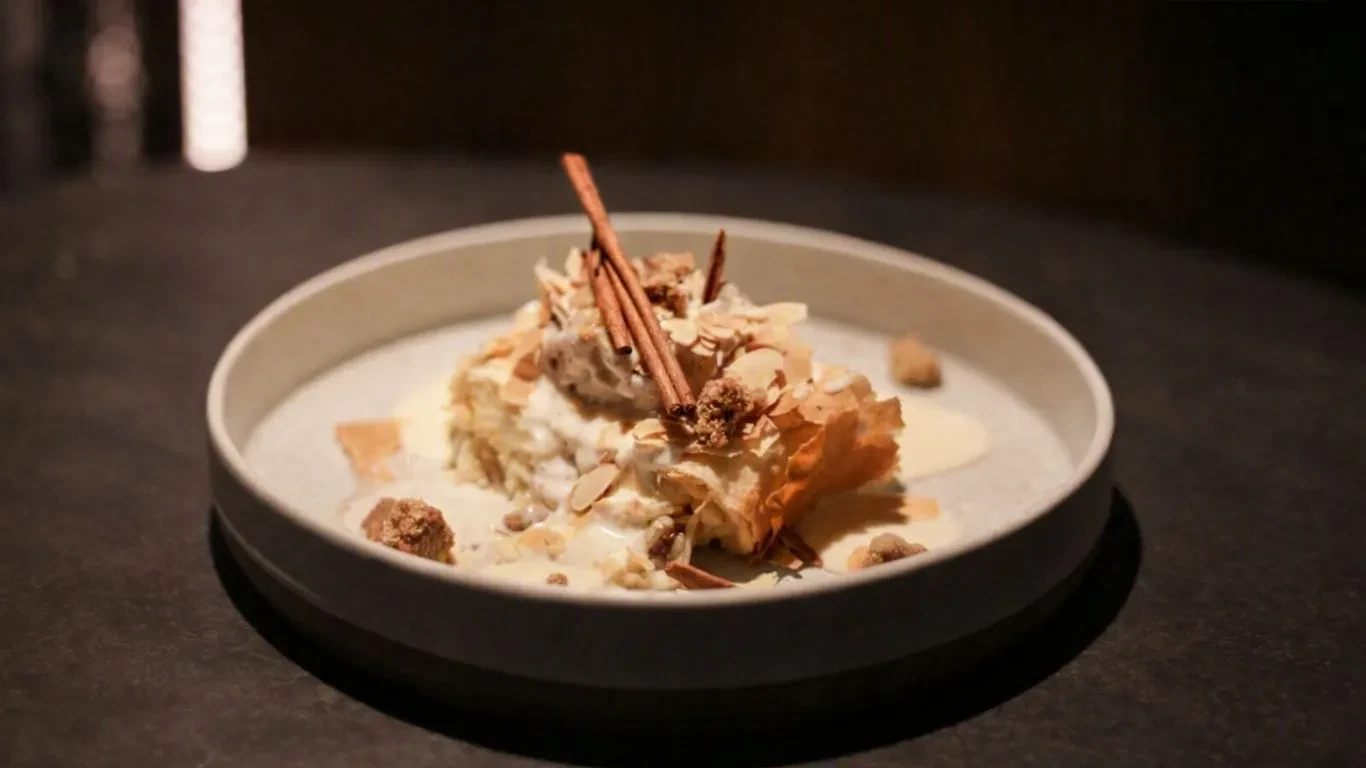
Although Wiener Apfelstrudel is today closely associated with Vienna's cosy café culture, the technique itself, with its paper-thin strudel dough, comes from the Ottoman Empire and reached Austria via Hungary. Viennese bakers refined the recipe in the 1600s, and the oldest handwritten version, from 1696, is kept today at the Vienna City Library.
For Austrians it is a firm Sunday classic. The baking tradition demands that the dough be rolled so thin that you can read a newspaper through it, which is actually a good rule of thumb if you want to take on the Apfelstrudel recipe at home. It is always served warm, with a juicy filling of tart apples, cinnamon, raisins and butter-toasted breadcrumbs.
Kaiserschmarrn — the emperor's torn pancake
Kaiserschmarrn came into being in Vienna in the late 1800s, according to legend created for Emperor Franz Joseph I. The story goes that the court chef dropped a thick pancake so that it broke apart in the pan — and instead of starting over, he covered the mistake with a generous dusting of icing sugar and served it as a new dish.
Today it is one of the most popular dishes in the Austrian Alps, where skiers and hikers eat it as a hearty meal after a day in the mountains. The light, thick pancake batter is torn into pieces as it cooks, lightly caramelised with sugar and served warm with a plum or apple compote.
Salzburger Nockerln — the mountains on a plate
Salzburger Nockerln originates from the baroque city of Salzburg in the 1600s. According to one of the city's best-known legends, the dessert was invented by Salome Alt, mistress of Salzburg's prince-archbishop Wolf Dietrich von Raitenau — a story that should probably be taken with a grain of salt, but which lives on to this day.
The three golden peaks of baked egg-white soufflé are no coincidence: they are meant to represent the three mountains, Mönchsberg, Kapuzinerberg and Gaisberg, that surround the city, dusted with icing sugar like freshly fallen snow.
Palatschinken — the thin pancakes with roots in antiquity
Palatschinken has travelled further than most desserts on this list. The technique comes from Roman cuisine, where the dish was originally known as placenta, and has since moved through Romania and Hungary before landing in Austrian cooking.
Where the French typically eat crêpes as a light dessert after a meal, Austrians often eat Palatschinken as a full everyday dish under the category Mehlspeisen (flour-based dishes). The thin pancakes are rolled tightly around either tart apricot jam or sweetened quark.
Germknödel — the steamed yeast dumpling for winter
Germknödel has its roots in the Catholic regions of Austria and Bavaria, where the yeast dumpling was originally created as a filling, meat-free dish in poor country kitchens. The dish earned a fixed place on Fridays, the historic fasting day when meat was forbidden.
The large, steamed yeast dumpling is filled with dark plum purée (Powidl) and is traditionally served in melted butter or warm vanilla sauce, topped with a generous sprinkling of poppy seeds.
Marillenknödel — summer's apricot dumplings
Marillenknödel comes from the Wachau valley in eastern Austria, known for its orchards. The dish was developed by local inns and housewives in the 1800s as a way to use the large summer harvest of apricots (Marillen), and the region still celebrates the fruit with annual apricot festivals.
The small, round dumplings are made from a light quark or potato dough with a whole, sweet apricot hidden in the middle. They are boiled and finally rolled in crisp, butter-toasted breadcrumbs.
From Vienna to the Danish dessert plate
What ties these ten dishes together is not only their history — it is also the craft. Paper-thin strudel dough, patiently layered meringue, dough that needs time to "settle". It is exactly the kind of respect for technique and ingredients that we work by at Kastbergs.
Many of the Austrian classics are ideal to reimagine with ice cream and sorbet: a scoop of vanilla ice cream with the warm Apfelstrudel, a fresh raspberry or blackcurrant sorbet as a counterpoint to the rich Sachertorte, or a scoop of hazelnut ice cream beside an Esterházytorte. Find more ideas for how ice cream and sorbet can be brought into the dessert at kastbergs.dk/dessert-inspiration.