
Why we love ice cream desserts
Ice cream desserts have long been a favourite among amateur and professional chefs alike. There is something almost magical about the way ice cream can turn a simple dessert into something truly special.
The history of ice cream desserts
The first ice cream desserts date back to ancient China, where snow and ice were used to chill mixtures of fruit and honey. Over time, this culinary technique spread to the Middle East and Europe, where it was refined and developed into the complex, sophisticated ice cream desserts we know today. With the invention of the freezer in the 19th century, ice cream desserts became more accessible and popular all over the world.
Why we love ice cream in desserts
Why we love ice cream in desserts
1. Temperature contrast
One of the most remarkable qualities of ice cream desserts is the temperature contrast between the cold elements and the warm or room-temperature components of a dessert. This contrast creates an exciting and pleasing experience for the palate, and can make even a simple dessert complex and interesting.
2. Texture
Ice cream adds a unique texture to desserts, ranging from creamy and smooth to hard and crisp. Combining different textures in a single dessert can add an extra sensory dimension to the tasting experience. Think of a perfectly baked brownie topped with a scoop of vanilla ice cream – the warm, fudgy cake meets the cold, creamy ice cream in perfect harmony.
3. Flavour combinations
The possibilities for flavour combinations with ice cream desserts are endless. Ice cream pairs easily with fruit, chocolate, nuts, caramel and much more. It can also carry complex flavour profiles such as lavender, basil or even wasabi, allowing chefs to experiment and create unique dessert experiences.
4. Aesthetic appeal
Visually, ice cream desserts are also incredibly appealing. The contrasting colour that appears when ice cream is served with other components adds a visual element that can take a dessert to the next level. The presentation of a dessert is just as important as its taste, and ice cream can add that extra touch that makes your guests remember your dessert long after they have eaten it.
The role of ice cream in desserts
Ice cream plays many roles in desserts, from main ingredient to complementary element. Each role adds its own dimension to the overall experience of the dessert.
Main ingredient
When ice cream is the star of the dessert, it is important to choose flavours and textures that shine through. Ice cream cakes, ice lollies and parfaits are examples of desserts where the ice cream takes centre stage.
Complementary role
Ice cream can also be used to complement other dessert components. A spoonful of sorbet beside a tart or a mousse can add freshness and balance to the dish. It also provides a lovely contrast in both flavour and temperature.
Fusion desserts
For modern chefs, ice cream is an exciting element in fusion desserts, where different cuisines and techniques meet. Think of ice cream made with liquid nitrogen for an extra creamy texture, or the use of unusual ingredients such as herbs and spices in ice cream recipes.
Using ice cream in professional kitchens
Using ice cream in professional kitchens
Parfaits and semifreddo
Parfait and semifreddo are two examples of ice cream desserts that combine frozen and non-frozen components. These desserts can be sliced and served as individual portions, which makes them ideal for formal dinners and events.
Experimental ice cream desserts
Modern chefs are experimenting with innovative ways of including ice cream in their desserts. Examples include nitrogen ice cream, which is made using liquid nitrogen and creates an ultra-smooth texture, as well as ice cream sandwiches, where creativity can run free in terms of both filling and wrapping.
8 examples of ice cream desserts
We would like to share some examples of delicious ice cream desserts from our archive of dessert inspiration:
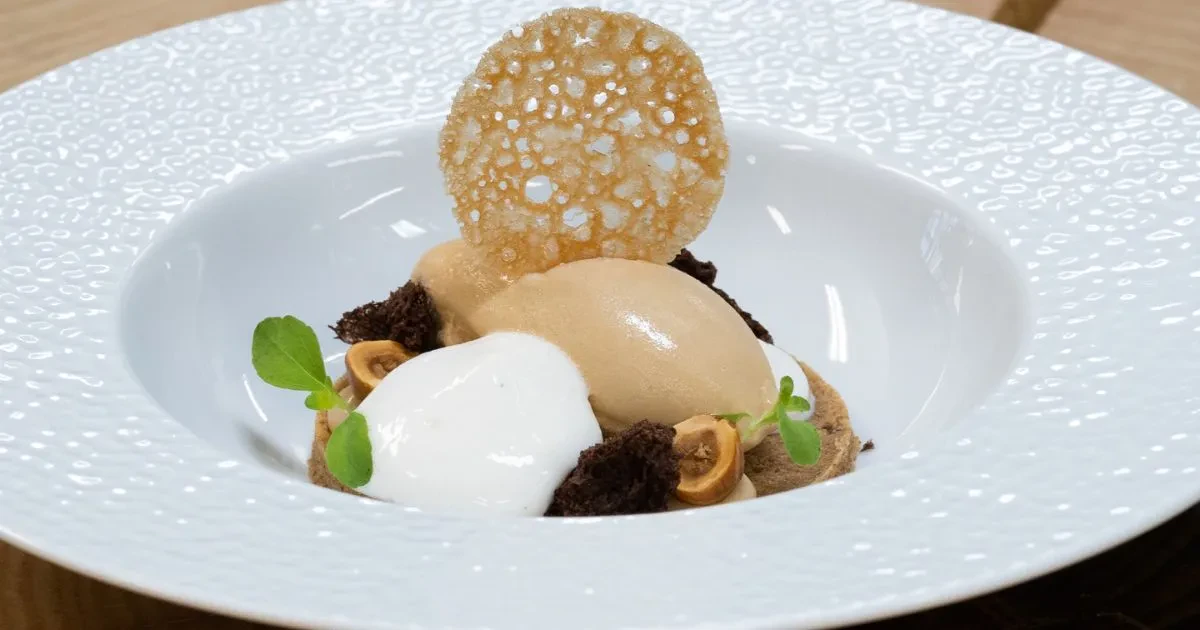
– Modern CappuccinoThis dessert is built around Espresso Honey ice cream, and was created to imitate a hot cup of espresso as a cold dessert. Like a regular espresso, the ice cream has a strong coffee flavour, which, just like the drink, is sweetened with milk – or, in the dessert's case, milk cream. It also contains muscovado and caramelised hazelnuts.
– Baked AlaskaBaked Alaska is a classic dessert that combines hot and cold in a spectacular way. A cake base is topped with ice cream and covered with meringue, which is then quickly browned at high heat. The result is a dessert that is both visually impressive and irresistibly delicious. This Baked Alaska is an exceptionally beautiful example, made by Sisse Pernille Busk from Knudhule Badehotel.
– Risalamande with chocolate sphere and cherry sorbetHere A’ Hereford Beefstouw takes a classic Christmas dessert and turns it partly into an ice cream dessert. We keep the classic homemade risalamande, but replace the usual cherry sauce with a chocolate sphere filled with cherry sorbet. This gives the dessert a new expression with a cold element, as well as more bite and crunch from the shell of the chocolate sphere.
– Molskroen's Banana splitBanana split is a classic in which the bananas go hand in hand with vanilla ice cream, an integral part of this dessert. This is Molskroen Strandhotel's version of a banana split, and it also includes chantilly sauce, chocolate sauce and fresh raspberries.
– Rainbow ice cream dessertThe three-colour ice cream is a classic and has been for many years. This version is different, however, and of course made with Kastbergs Gourmet-Is. It features vanilla and chocolate ice cream, but unlike the original three-colour ice cream, it uses raspberry sorbet, which also gives it its new name. The raspberry sorbet adds a slightly tart breath to the sweetness of the vanilla and the deep, slightly bitter notes of the chocolate ice cream, creating a good balance.
– Molskroen's New Year's dessertThis innovative ice cream dessert is built around delicious ice cream, with added elements that contribute contrasts in temperature and consistency. The dessert consists of passion fruit sorbet and salted caramel ice cream, both encased in a beautiful chocolate sphere. It is also served with warm passion fruit coulis and caramel sauce.
– Pickled figs with vanilla ice cream and caramel sauceWith pickled figs, you can reduce the amount of sugar and other sweeteners in your desserts, because figs, especially pickled figs, are naturally sweet. That is why pistachio nuts and caramel sauce, among other things, are added to this dessert, as they each bring something different to it. All of this is served with our creamy vanilla ice cream.
– Kakigori with rhubarb sorbet and vanilla ice creamKakigori is a traditional Japanese ice dessert of "shaved ice" sprinkled with various syrups. This version is combined with rhubarb sorbet to add acidity to the dessert and vanilla ice cream to add sweetness. A true ice dessert from the Asian countries.
Conclusion
Ice cream desserts offer an endless range of possibilities for creativity and culinary innovation. Whether you are a professional chef who wants to impress your guests, or a home baker who wants to add something special to your desserts, ice cream can be the perfect element to elevate your creations.
Remember, when it comes to ice cream desserts, there are no limits to what you can achieve. So go out and experiment, and discover why we love using ice cream in desserts.
Thank you for reading, and feel free to share your own ice cream dessert creations and tips in the comments below.