Madagascar Bourbon Vanilla – origin and use
Learn more about Madagascar Bourbon Vanilla and how we use it at Kastbergs Gourmet-Is
The origin of vanilla
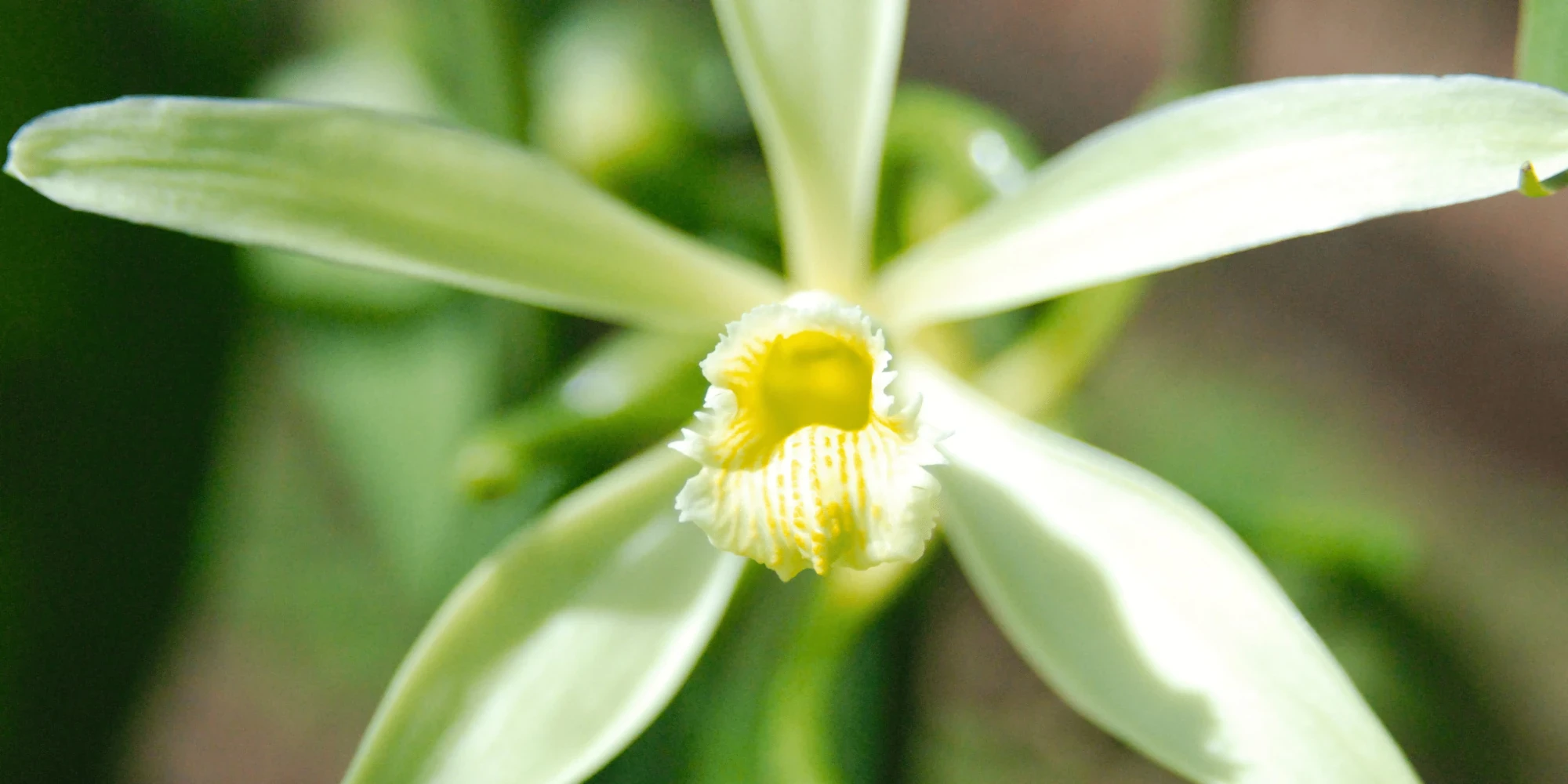
Vanilla comes from the vanilla orchid, which grows in tropical forests with an average temperature of 24 degrees Celsius. This delicate plant requires very specific conditions, and climate change may threaten its existence. The most popular type of vanilla is Madagascar Bourbon Vanilla, known for its delicious, aromatic flavour. Yet achieving those flavourful black seeds takes a good deal of work.
Bourbon Vanilla takes its name from Bourbon Island, also known as Réunion Island, where the plant was cultivated in a French colony. Vanilla originally came from Mexico, where it was used to take the bitterness out of chocolate. But because the vine can only be pollinated by one particular type of bee, found only in Mexico, the plant would not flower anywhere else. It was not until 1850 that a young enslaved boy on Bourbon Island, Edmond, discovered how to pollinate the vanilla orchid by prodding and shaking the flower. In gratitude for his discovery, he was set free and took the name Albius.
Madagascar Bourbon Vanilla Pearls are used in both Kastbergs Gourmet-Is Vanilla Ice Cream and Vanilla Soft Serve. Would you like to taste that delicious, aromatic vanilla flavour? Then treat yourself to an ice cream or soft serve from Kastbergs Gourmet-Is, where we always use the finest ingredients.
Production
Methods similar to the one Edmond, later Albius, used are still in use today, as the orchids are still hand-pollinated in most places in the world that do not have the Melipona bee found in Mexico. This is certainly a contributing factor to vanilla's very high price. In fact, vanilla is the second most expensive spice in the world, surpassed only by saffron. The vanilla we use comes from the orchid Vanilla Planifolia, whose cultivation is very delicate and demands a great deal of attention. The vines on which the orchids grow generally lean against a support tree, typically a mango or avocado tree, and for that reason most vanilla growers cultivate more than one crop. The vanilla plant is also very delicate and only flowers every 2–3 years. On top of that, the plant flowers only once a year, and the vanilla farmer has just a few hours to pollinate it before it pollinates itself. After that, it takes about 9 months before the pods are ready for harvest. The fruit should ideally be picked within a day, and at this point you are still holding a green, flavourless vanilla bean. A long process of steaming and drying now follows, turning the vanilla bean black and aromatic.
The first step is blanching the green pods in 60–70 degree water for 3 minutes, which makes the vanilla pods pliable and halts the growth process. Right after blanching, the pods are wrapped in warm wool blankets. While wrapped, they turn brown over the course of 48 hours and develop a sweet aroma. This is due to the pods fermenting, and it is this that kick-starts the development of flavour in the vanilla bean. Afterwards, the pods are placed on mats or blankets and left to dry in the sun for 2–3 hours every day for 6 weeks, though never in sun that is too intense. To ensure the process succeeds, the pods are wrapped in blankets at night. Over the 6 weeks, the vanilla pods lose up to half of their weight, yet retain their lovely aroma and colour. After the sun-drying, the pods are left to dry in the shade, spread out over a rack so that air can circulate.
Finally, the vanilla pods are stored for another 2 months in wooden boxes, wrapped in wax paper, and it is during this period that they develop their full flavour profile. Through this process, from unripe pod to ripe vanilla bean, an aroma compound called vanillin forms in the pods and is the primary source of flavour in the vanilla bean. Besides vanillin, up to 100 other aroma compounds are found in the finished vanilla.
Flavour and use of Madagascar Bourbon Vanilla
Madagascar Bourbon Vanilla has a unique, aromatic flavour and scent, and is often used in baking and desserts. At Kastbergs Gourmet-Is, we are happy to use Madagascar Bourbon Vanilla, as it is known for its particularly rich and nuanced flavour, which comes from the ideal climate and the unique traditions and growing methods. We always care about using high-quality ingredients, which is why we use Madagascar Bourbon Vanilla in our Kastbergs Vanilla Ice Cream and Kastbergs Vanilla Soft Serve.
Sustainable Vanilla Initiative
In 2016, our supplier joined a community of companies working to create more sustainable vanilla production in Madagascar through an initiative called the "Sustainable Vanilla Initiative". In doing so, our supplier has committed to improving vanilla production and ensuring higher quality, while working to improve the quality of life and working conditions for local farmers and communities in Madagascar.