
Maku Koncept – an ambitious German restaurant
Patrick “Patu” Habacht, the visionary behind the quality-driven and innovative restaurant group Maku Koncept, is turning the traditional kitchen hierarchy on its head. In his kitchen, power, responsibility and decision-making are shared across the entire team – a rare leadership style in the world of gastronomy. In the kitchen at “Maku Restaurant & Bar” in Solingen in North Rhine-Westphalia, preparations for the evening service are in full swing. Patu moves among his staff with a leader's confidence, but it is his ability to listen and collaborate that really stands out. He stops at the soup pot and asks a question that invites input: — “What do you think – doesn't it feel like something is missing to round off the flavour?” he asks. A young kitchen assistant, encouraged by Patu's inclusive style, suggests adding a little more nutmeg. Patu nods approvingly and encourages him to try it, then continues his round of the kitchen.
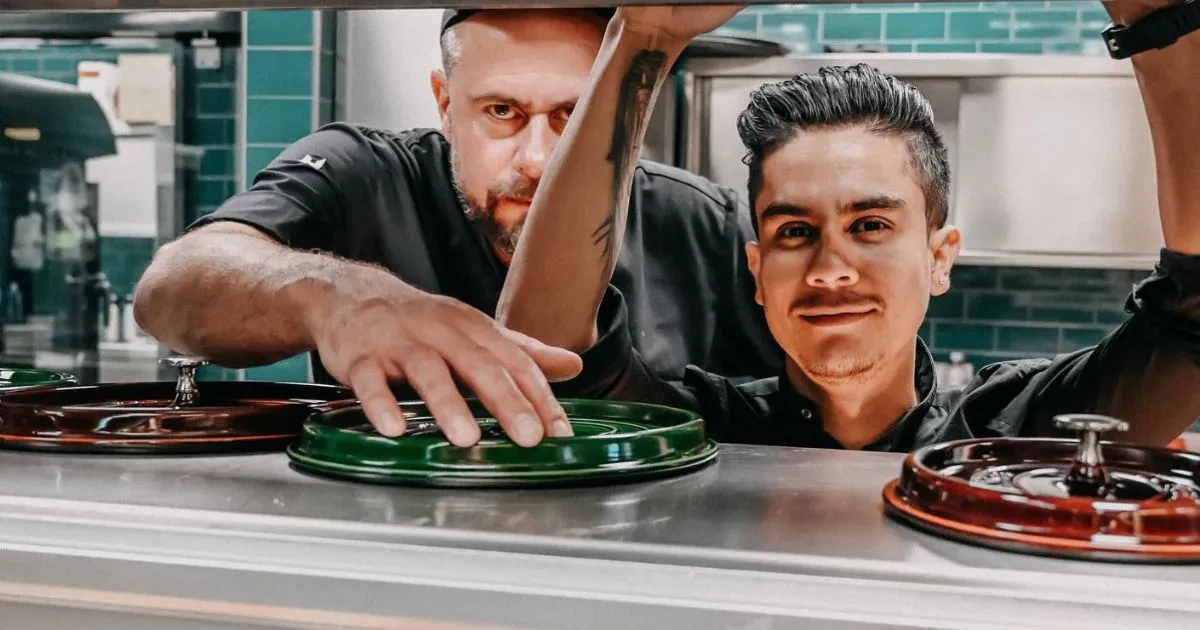
Sharing power in the kitchen
For Patu, good leadership is not about control, but about creating motivation and ownership among his employees. The German restaurateur practises a leadership style that stands in sharp contrast to the traditionally authoritarian approach often seen in the industry:
— “In my experience, employees go the extra mile when they feel valued and involved – and you can taste it in the quality of the food we serve,” Patu explains.
Patu is conscious of his inclusive approach. When new ingredients and products are being considered, he invites his team to take part in blind tastings to hear everyone's opinion:
— “For me, it's not just about finding the best ingredients. It's just as much about building a strong team where everyone contributes to shared decisions. Two mouths taste better than one – and four mouths taste even better,” says Patu.
In day-to-day operations at Maku Koncept, Patu distributes both tasks and responsibility among his team. By involving them in decisions on everything from menu planning to purchasing, he creates a strong sense of community. He even offers the most dedicated employees co-ownership through bonus schemes. In this way, he effectively breaks down the barrier between management and the rest of the staff.
For Patu, it is essential that every single employee feels like a valuable part of the shared effort for success.
Germans must learn to prioritise quality over price
Patu insists on quality – not only behind the stove, but throughout the entire supply chain. His unconventional leadership style and focus on high-quality ingredients also influence the way he chooses suppliers:
— “I value long-term relationships where I can trust 100 percent in the deliveries and the quality of the ingredients from my partners,” he emphasises.
Patu demands that the flavour profile of the ingredients stand out clearly. Vanilla should taste of real vanilla – nothing else. But that kind of genuine quality is rare in Germany, he explains:
— “Many German restaurants use industrially produced ice cream of questionable quality. Genuine, handmade premium ice cream like the one we buy from Danish Kastbergs Is is something you'll find almost exclusively in Michelin-starred restaurants,” he points out.
With the ice cream dairy Kastbergs Is, which supplies Maku Koncept, Patu shares a passion for honest craftsmanship and authentic ingredients:
— “Just as we work only with the best ingredients in our kitchens, we expect the same from our suppliers. Kastbergs are transparent about their entire production process and proud of their craft. You can taste it,” says Patu.
Patu hopes to inspire Germans to choose genuine craftsmanship and quality over quantity and mass production. The collaboration with Kastbergs Is is a perfect match for his philosophy and way of working.
The art of finding balance in a demanding industry
The restaurant industry is unforgiving. It demands tireless dedication and can wear out even the most passionate entrepreneurs. Patu knows all about that:
— “You have to be careful not to drown in work. My motivation? It comes from the freedom and variety of my job. I insist on taking care of myself with exercise, healthy meals and time with my family. That balance is essential to keeping both body and mind healthy,” says Patu.
Although holidays do not take up much space in his life, Patu makes an effort to get away once or twice a year to warmer climes. His favourite destination is Portugal, where he finds peace and recharges with his family. Without these breaks, his many projects would quickly start to feel like a burden:
— “Looking out over the sea, feeling the sand between my toes and relaxing with the people I love – that gives me energy. That recharge is absolutely essential when you run several restaurants and constantly have to make decisions or worry. I love the freedom in my work, but without breaks to recharge, the ideas and the passion would quickly disappear. For me, work-life balance is about preserving the ability to create,” Patu concludes.